First appeared on directory.lawonline.ca.
Legal help in Canada isn't spread evenly across the map. It's bunched up where the people are, and thin where they aren't. Of the 12,416 law firms in the LawOnline directory, more than half sit in a single province.
The concentration is extreme
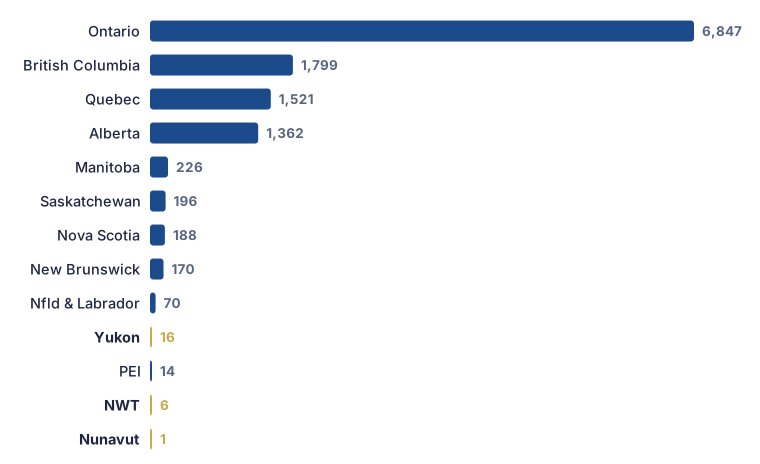
Ontario alone holds 6,847 firms, or 55 percent of the directory. Add British Columbia, Quebec, and Alberta and the four biggest provinces account for 93 percent of all listed firms. That leaves the six smaller provinces and three territories to split the remaining sliver.
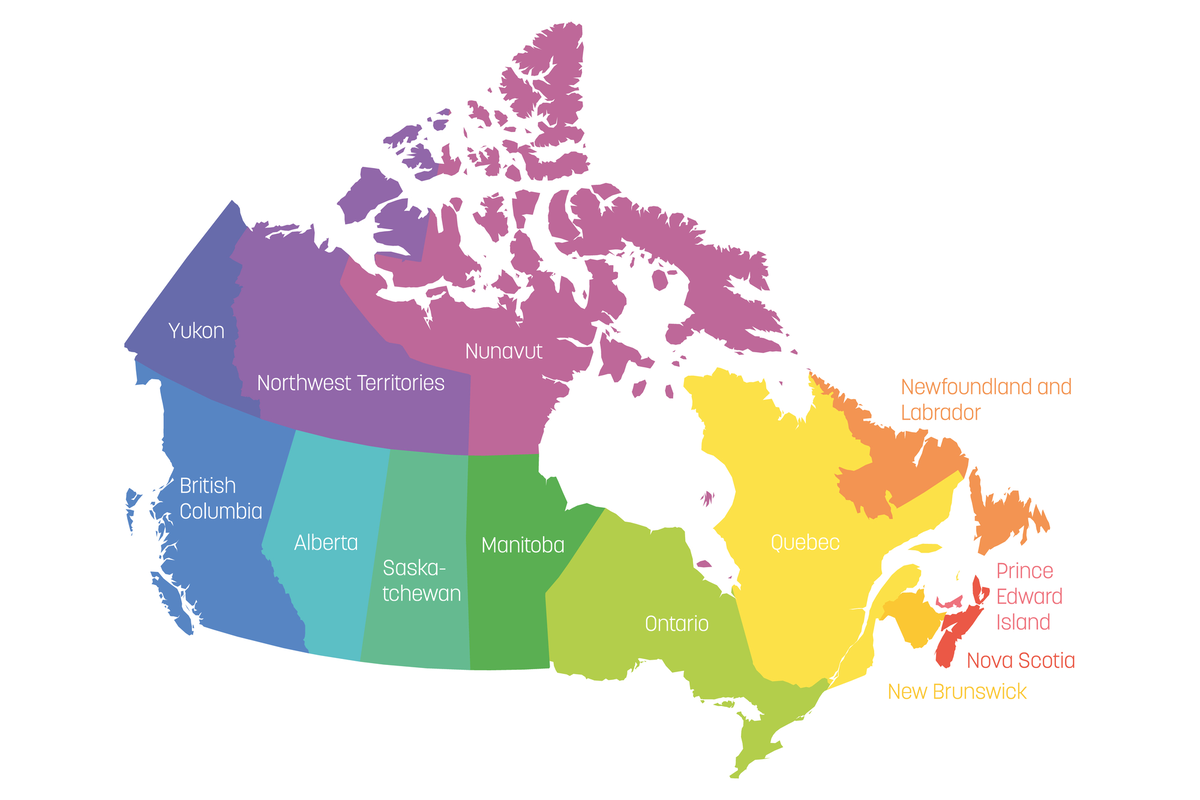
The territories are the sharpest example. Yukon lists 16 firms, the Northwest Territories 6, and Nunavut 1. That's 23 firms across a third of Canada's land mass. Broadly, the geography of legal help mirrors the geography of the population: most Canadians live in a handful of provinces, and so do most lawyers.
Two honest caveats
Before anyone reads this as a precise census, two things need saying.
First, this counts a firm once, in the single province we record as its home. A national firm with offices in four provinces still shows up as one firm in one place. Osler, Hoskin and Harcourt, for example, lists 455 lawyers across offices in four provinces but counts once. Several of the large Atlantic firms carry a Prince Edward Island tag while serving all four Atlantic provinces. So the provincial totals describe where firms are based, not the full reach of legal services.
Second, our directory is a large sample, not a complete list of every lawyer in the country, and its coverage is more thorough in the big provinces than in the far North. The single firm listed in Nunavut doesn't mean one lawyer serves the territory. It means the online, client-facing legal presence there is thin, which is a real finding in itself, just not the same as counting every lawyer.
The access-to-justice gap behind the numbers
Even with those caveats, the shape is real, and it matches a problem researchers have flagged for years. Access to legal help outside major cities, and especially in rural and northern communities, is a well-documented gap that the Canadian Bar Association and access-to-justice groups have pushed to close. When the nearest lawyer is a flight away, or handles a different area of law than you need, a legal problem gets harder and more expensive to solve.
For people in underserved areas, a few practical options help. Many firms now work remotely, so a lawyer in a larger centre can often handle a matter at a distance. Provincial legal aid plans and community legal clinics serve people who qualify. And for common documents, some tasks can be done with a lawyer or notary by phone or video. If you're searching from outside a big city, you can start your search here and look for firms that offer virtual appointments.
Frequently Asked Questions
Which province has the most lawyers in Canada?
By number of listed firms, Ontario leads by a wide margin, with 55 percent of the firms in our directory as of September 2026, followed by British Columbia, Quebec, and Alberta. Because a firm is counted once in its home province, this measures where firms are based, not the total reach of every lawyer.
Why are there so few law firms in the territories?
Small populations are the main reason, along with a thinner online presence for the firms that do operate there. Our directory lists 23 firms across Yukon, the Northwest Territories, and Nunavut combined. That reflects a real access gap in the North, though it undercounts lawyers who work there without a client-facing web presence.
How can I find a lawyer if there are none near me?
Look for firms that offer virtual or phone appointments, which many now do, so distance matters less than it used to. Check whether you qualify for provincial legal aid or a community legal clinic. For routine documents, a lawyer or notary can often help remotely.