
Social media is one of those topics where law firm partners tend to fall into one of two camps: they either dismiss it entirely ("our clients don't come from Facebook") or they dive in without a strategy and post birthday wishes and generic legal tips for two months before quietly giving up.
Both camps are leaving money on the table.
The data backs this up. According to the CBA Legal Technology Survey Report (2023), 45% of Canadian law firms now use social media platforms for client outreach. That's nearly half the profession. And the firms that commit to it are seeing results: the Clio Legal Trends Report Canada (2024) found that Canadian law firms using social media saw 23% higher client inquiry rates compared to those that don't.
Done with a clear purpose, social media marketing generates real referrals and direct client inquiries for Canadian law firms. Done without one, it's an expensive time sink that produces nothing. This guide covers what actually works.
The Right Question to Ask First
Before choosing platforms or writing posts, get clear on your goal. Social media can serve two different functions for a law firm:
- Lead generation, reaching potential clients directly (people searching for a personal injury lawyer, a family lawyer, or an immigration consultant)
- Referral development, staying visible to professionals who can refer business to you (other lawyers, physicians, financial advisors, insurance brokers)
These two goals require very different strategies. A personal injury firm looking to attract direct client inquiries should approach LinkedIn differently than a commercial litigation firm cultivating relationships with in-house counsel. Know what you're optimising for before you post anything.
Which Platforms Are Worth Your Time?
The CBA survey data paints a clear picture of where Canadian lawyers are spending their time online. LinkedIn dominates, with 78% of firms citing it as their primary social platform. Facebook follows at 52%, with Instagram and TikTok gaining ground among younger practitioners.
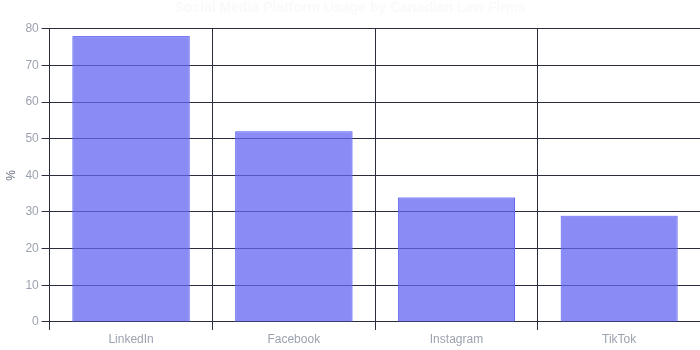
Source: CBA Legal Technology Survey Report 2023, CBA Practice Management Survey 2023
LinkedIn: The Referral Machine
For most Canadian law firms, LinkedIn is the highest-return social platform. It's where other professionals, the people most likely to refer business to you, spend their time.
Who should prioritise LinkedIn:
- Business law, corporate, and M&A practices
- Insurance defence and commercial litigation firms
- Employment and labour lawyers
- Wills and estates practices marketing to financial advisors and wealth managers
But personal injury firms also use LinkedIn effectively, particularly to build relationships with physicians, physiotherapists, chiropractors, and other healthcare providers who frequently encounter accident victims. A PI firm in Ottawa we're aware of grew a significant stream of referrals from physiotherapy clinics by consistently publishing LinkedIn content on ICBC-adjacent issues and treatment-related legal considerations.
Solo practitioners are leading the charge here. According to Clio's data, 61% of solo practitioners post weekly on LinkedIn. That consistency pays off: the Barreau du Québec (2024) found 41% of Quebec lawyers now use LinkedIn professionally, a figure that's growing year over year.
What to post on LinkedIn:
- Short-form commentary on recent court decisions or legislative changes in your practice area
- Case outcomes or settlements (where ethically appropriate and client-approved)
- Insight pieces on how changes in law affect your clients' industries
- Candid posts about firm culture, pro bono work, and community involvement
Aim for 2-3 posts per week. Consistency matters more than volume.
Facebook and Instagram: Direct-to-Consumer
Facebook and Instagram are better suited for practices serving individual clients rather than businesses. Personal injury, family law, immigration, and criminal defence firms can reach potential clients effectively here, especially using paid advertising.
Organic content on Facebook and Instagram tends to underperform for law firms without advertising support. But as a platform for running targeted ads, Facebook is powerful. A personal injury firm in Toronto can target adults who recently reported a car accident, or audiences with characteristics that correlate with needing legal help. The targeting options are more sophisticated than most lawyers realise.
One important caveat: the CBA Practice Management Survey (2023) found that while 52% of CBA members use Facebook for firm promotion, only 19% formally track their social media ROI. That's a missed opportunity. If you're investing time or money in social media, you need to know what's working.
Ethical rules also vary by province. Lawyers in Ontario, British Columbia, and Alberta are subject to specific advertising rules under their respective law societies. For a detailed breakdown of what Ontario lawyers can and cannot say, see our guide to Ontario lawyer advertising rules. Before running any social ads, review your law society's marketing guidelines.
What to post organically:
- Client testimonials (with written permission)
- Frequently asked questions answered in plain language
- Behind-the-scenes content about your team and office
- Community involvement and sponsorships
- Educational content about common legal situations ("what to do immediately after a car accident in Ontario")
YouTube and Video
YouTube has become a serious client-acquisition channel for law firms willing to invest in it. A personal injury lawyer in Vancouver who publishes 60-second videos answering common post-accident questions ("Do I have to speak to ICBC without a lawyer?", "How long do I have to file a personal injury claim in BC?") will appear in YouTube search results and Google video carousels, effectively doing SEO and social marketing simultaneously.
Video content also performs exceptionally well on LinkedIn and Instagram when repurposed. One well-produced video can generate content across multiple platforms.
What to Actually Post: A Framework
Most law firms post content that interests themselves, recent case wins, awards, speaking engagements. This content performs poorly because it's self-referential. The highest-performing law firm social content is useful to the audience.
Ask yourself: What does my prospective client or referral source need to know that I know?
Then organise your content into three buckets:
1. Educational content (50% of posts) Answer the questions your clients actually ask. "What happens after I report an accident to my insurance company?" "Can I be fired for filing a workers' compensation claim?" "How does spousal support get calculated in Ontario?"
This content demonstrates expertise without pitching, which is exactly what the bar regulators want and exactly what social media algorithms reward.
2. Social proof (25% of posts) Share client outcomes, Google reviews, and team achievements. A personal injury firm in Hamilton regularly posts short case result descriptions ("Settlement reached for a client who suffered a fractured vertebra in a rear-end collision on the QEW"), using approved language that avoids specific dollar amounts in provinces where that's restricted. This builds credibility over time.
3. Culture and human content (25% of posts) People hire lawyers they trust. Posts about community involvement, pro bono work, team milestones, and charitable giving build the human connection that turns a follower into a caller.
The Biggest Mistake Law Firms Make
The single most common mistake we see: treating social media as a broadcasting channel and never engaging.
Social media algorithms reward engagement, comments, replies, shares. A law firm that posts content but never responds to comments or engages with other people's posts is essentially shouting into an empty room.
Dedicate 10-15 minutes per day to actual engagement: commenting on posts from referral partners, responding to questions in your comments, congratulating colleagues on professional milestones. This is where the real relationship-building happens.
A personal injury firm in Calgary used LinkedIn engagement strategically, a partner there committed to commenting meaningfully on posts from local orthopedic surgeons, physiotherapists, and occupational therapists for three months. Within that period, two referral relationships developed that turned into regular sources of new clients.
The Investment Is Growing, and It's Working
Canadian law firms are putting real money behind social media. Statistics Canada data (2022) shows legal services firms allocated 8.4% of their marketing budgets to digital advertising (including social media), up from 5.2% in 2019. That's a 60% increase in just three years.
Mid-sized firms are moving even faster. The Thomson Reuters Canadian Legal Market Overview (2024) found that 67% of mid-sized Canadian firms increased their social media spending by 22% year over year.
Why the surge? Because social media is now a meaningful lead source for Canadian law firms. The Department of Justice Canada's Pathways to Justice report (2023) found that 28% of low-income Canadians discovered legal services via social media. That's a substantial channel for firms doing access-to-justice work or serving individual clients.
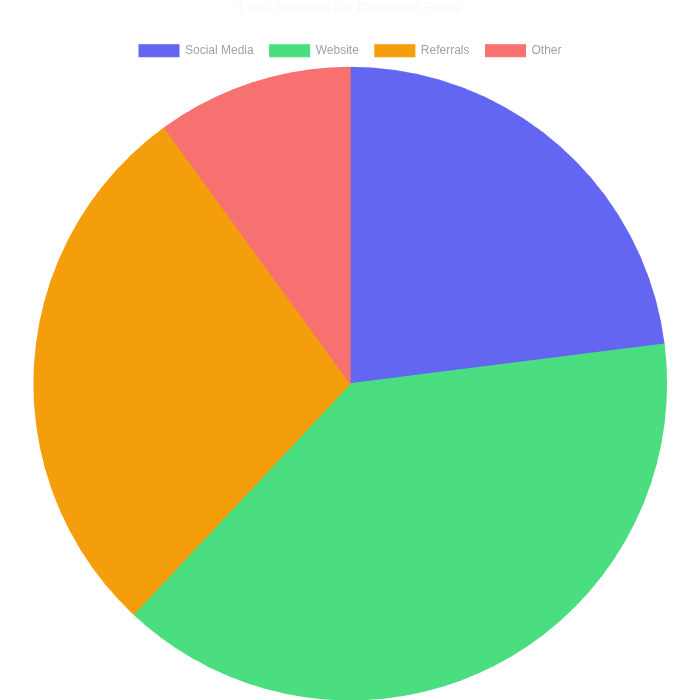
Sources: Department of Justice Canada, Pathways to Justice 2023; Clio Legal Trends Report Canada 2024
Measuring Results
Vanity metrics (likes, followers) tell you very little about whether your social media is generating business. Track what actually matters:
- Direct messages and inquiries coming from social platforms
- Profile visits and website clicks from your social profiles
- Referral conversations initiated through LinkedIn connections
- Referral source tracking in your intake form, "How did you hear about us?"
If you're running paid social advertising, track cost per lead and cost per consultation booked. Most PI firms targeting accident-related keywords on Facebook should expect to pay between $50-150 per qualified lead, depending on market and ad quality. That's a benchmark, not a guarantee.
A Note on Compliance
Canadian lawyers are bound by advertising rules that vary by province and law society. The general principles across most jurisdictions include:
- No misleading claims about outcomes or success rates
- No comparative claims ("best personal injury lawyer in Ontario") without substantiation
- Testimonials permitted in many provinces but with conditions
- Specific rules around contingency fee advertising in some provinces
Always review your provincial law society's marketing guidelines before running social media ads or publishing testimonials. If you're unsure, it's worth a quick call to your law society's ethics advisor. The call is free and confidential, and it's much better than a complaint.
Getting Started Without Overwhelm
If you're starting from zero, don't try to be everywhere. Pick one platform, commit to it for 90 days, and measure results before expanding.
For most Canadian law firms, that platform should be LinkedIn. It's where your referral network lives. Even 2-3 thoughtful posts per week, combined with 15 minutes of daily engagement, will produce measurable results within 90 days if done consistently.
LawOnline.ca works with Canadian law firms to develop and execute social media strategies tied to real business goals, not vanity metrics. Talk to us about your firm's marketing and we'll tell you honestly where social media fits in your growth plan.
Frequently Asked Questions
Which social media platform is best for Canadian law firms?
LinkedIn delivers the highest return for most Canadian law firms, particularly for referral development with other professionals — physicians, financial advisors, insurance brokers, and other lawyers. For consumer-facing practices like personal injury, family law, and criminal defence, Facebook and Instagram allow for effective paid advertising to potential clients directly.
How often should a law firm post on social media?
For LinkedIn, 2–3 substantive posts per week is a strong baseline. Consistency matters more than frequency — a steady, reliable cadence outperforms bursts of activity followed by silence. Content that provides genuine value to your audience will consistently outperform high-volume, low-quality posting.
Can Canadian lawyers advertise on Facebook and Instagram?
Yes, but with important caveats. Canadian lawyers are subject to advertising rules that vary by province and law society. Most jurisdictions prohibit misleading claims, unsubstantiated comparisons, and certain uses of testimonials. Before running paid social ads, review the marketing guidelines published by your provincial law society and consult your law society's ethics line if you are uncertain about any specific content.
What types of social media posts perform best for law firms?
Educational content consistently outperforms promotional content. Posts that answer the questions prospective clients are actually asking — written in plain language, without legal jargon — demonstrate expertise and build trust over time. Social proof content such as client outcomes and reviews, and humanizing content about your team and community involvement, round out an effective content mix.
How do I measure whether social media is generating business for my law firm?
Track direct inquiries and messages from social platforms, website visits attributed to social referrals, and referral source data from your intake process. Likes and follower counts are largely irrelevant to business development. The most useful single addition to your intake form is "How did you hear about us?" — tracking that data consistently reveals which channels are actually generating clients.
Is it worth paying for Facebook ads as a personal injury law firm?
For most personal injury firms, paid Facebook and Instagram advertising can deliver qualified leads at a reasonable cost when campaigns are properly structured. Targeting options allow you to reach adults in specific geographic areas with relevant interests and demographics. Expect to pay between $50–$150 per qualified lead in most Canadian markets, though this varies significantly by city, practice area, and ad quality.